HEALTH
What Causes Ringing in the Ears — and What Can Help With Tinnitus? A Discovery About a Hidden Cause Is Raising Alarm Bells for Those Still Trying to Simply “Live With” the Sound
If you hear constant ringing, buzzing, or whistling — especially when everything goes quiet — researchers have discovered that the problem may not start where most people think.
Dr. Oz on Tinnitus

You’ve probably noticed something strange about tinnitus.
After sleepless nights, trouble concentrating, and countless attempts to find something that helps, one question inevitably comes to mind:
“What’s really causing this sound — and how do I make it stop?”
For a long time, nearly all the attention has been focused on the ears.
That’s why many approaches simply try to mask the sound or make it easier to live with.
But researchers began investigating a different possibility:
What if the ringing is only a signal... and not the true source of the problem?
They observed that when an important nerve region near the auditory system becomes irritated, the brain may begin turning up the “volume” on signals that would normally be ignored.
The result can be that ringing, buzzing, or whistling sound that never seems to go away.
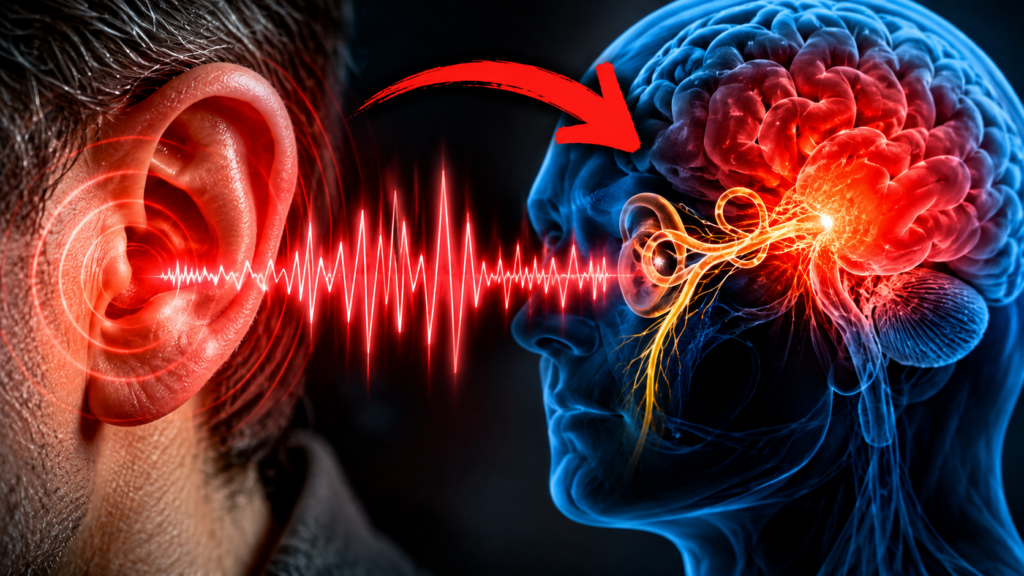
The big question then became:
What’s causing this irritation?
That’s when the investigation pointed to an inflammatory process that may keep this region irritated and the brain locked onto these signals.
This opened the door to a different approach:
Instead of simply masking the ringing, the idea is to calm this inflammation, protect the affected region, and help the brain stop amplifying these signals.
And that raises an important question:
If the problem isn’t actually starting in your ears... how many things you’ve already tried were targeting the wrong place?
In the video below, you’ll discover what may be behind tinnitus, why so many attempts can fail, and the approach being used to try to address the problem at its root.
If you’re searching for what causes tinnitus — or what may help stop the ringing in your ears — watch this before accepting that your only option is to “learn to live with it.”
The real danger may not be the ringing you hear today.
Because the same inflammatory process associated with tinnitus may continue affecting important nerve connections over time.
And that’s when a simple “ringing” sound stops seeming so harmless.
Memory loss. Brain fog. Cognitive decline. Dementia. Alzheimer’s.
That’s why waiting months or years, hoping the sound will simply disappear, could be a decision you may come to regret.
You may still be hearing nothing more than a ringing sound. But your body could be trying to alert you to something much bigger.
And the sooner you understand what may be happening behind this warning sign, the sooner you can decide what to do about it.
FAQ
What really causes ringing in the ears?
According to the findings presented, tinnitus may be linked to inflammation affecting nerve pathways near the auditory system, causing the brain to amplify signals that would normally be ignored.
Why does tinnitus seem worse at night?
Because in a quiet environment, there are fewer external sounds competing with the tinnitus. This can make the ringing, buzzing, or hissing seem even more noticeable, especially when you’re trying to fall asleep.
What can help with ringing in the ears?
The approach presented focuses on calming inflammation and reducing hypersensitivity within the nervous system, rather than simply trying to mask the sound.
Why might the treatments I’ve already tried not have worked?
Because many approaches focus on masking tinnitus or reducing your perception of the sound without addressing the underlying process that may be contributing to heightened nerve sensitivity. This new approach is based on that distinction.
If this discovery is so important, why is hardly anyone talking about it?
The people behind the presentation claim that there are major financial incentives to keep people dependent on medications and recurring treatments, and that an approach capable of addressing the underlying cause could threaten some of those profits.
They also claim this is why there have been attempts to prevent the discovery from gaining wider attention. These are claims made by the presentation’s creators, rather than established evidence of coordinated suppression.
